

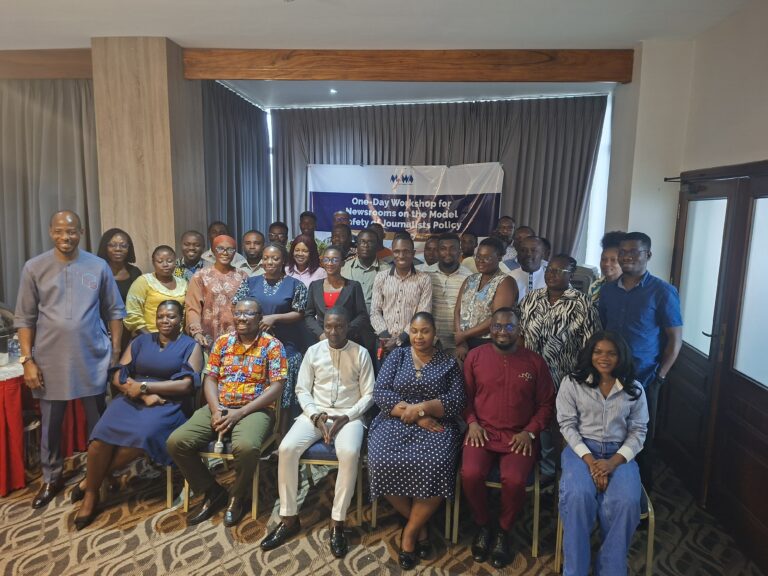
Media organisations in Ghana have been urged to adopt and implement the Model Safety of Journalists Policy to strengthen the protection of journalists against physical attacks, online harassment, intimidation, legal pressure and other occupational risks.
The call was made at a one-day workshop for journalists, editors and media managers in Accra, organised by the Media Foundation for West Africa (MFWA) to familiarise media practitioners with the policy and equip them with the knowledge and skills to adapt its provisions to their respective newsrooms.
The workshop formed part of efforts to promote a safer working environment for journalists and strengthen institutional mechanisms for preventing, responding to and reporting threats against media professionals.
Programme Director of the MFWA, Dr Kojo Impraim, said the safety of journalists was fundamental to the practice of journalism and the protection of press freedom, stressing that the responsibility for ensuring their safety should not be left to individual journalists alone.
He noted that journalists, in the course of informing the public, exposing wrongdoing and holding public officials accountable, were increasingly exposed to various forms of threats, including physical attacks, online harassment, intimidation, legal pressure and psychological stress.
Dr Impraim cited the challenges confronting investigative journalists and those reporting on sensitive issues such as corruption, abuse of power and illegal mining, saying such threats undermined the media’s ability to serve the public interest effectively.
He disclosed that the MFWA’s monitoring of violations against journalists recorded 32 cases across West Africa in the first quarter of 2026, increasing to 42 by the close of the second quarter.
According to him, attacks against journalists that go uninvestigated and unpunished create an environment that encourages perpetrators to continue targeting media practitioners.
He said the situation could also lead to self-censorship, fear and reluctance among journalists to pursue stories involving powerful individuals or institutions, ultimately depriving the public of important information.
Dr Impraim said media owners, managers and editors must recognise journalist safety as an institutional responsibility and make deliberate investments in systems that prepare and support reporters in the discharge of their duties.
He explained that newsroom safety policies should cover areas including risk assessment before assignments, emergency response mechanisms, digital and online security, legal support, psychological wellbeing and procedures for reporting threats or attacks.
He further encouraged media organisations to ensure that journalists, particularly those assigned to high-risk environments, were properly briefed and equipped before undertaking their assignments.
Dr Impraim urged participants to champion the adoption of the Model Safety of Journalists Policy in their respective organisations, adding that its effectiveness would depend largely on how well its provisions were translated into everyday newsroom practices.
He said the policy should not merely remain a document but must become part of the culture and operational procedures of media organisations.
Participants at the workshop were also encouraged to share knowledge gained with colleagues and management in their respective media houses to promote wider understanding of journalist safety.
The initiative is expected to contribute to strengthening the capacity of Ghanaian media organisations to identify occupational risks, prevent attacks and provide appropriate support to journalists when incidents occur.
The workshop also reinforced the need for collaboration among media organisations, civil society groups, law enforcement agencies and other stakeholders to create an environment where journalists can perform their professional duties without fear or undue interference.
The MFWA said sustained commitment to journalist safety would be critical to protecting press freedom, promoting accountability and ensuring that journalists can continue to serve the public interest.